 See photos and updates from listings directly in your feed
 Share your favorite listings with friends and family
 Save your search and get new listings directly in your mailbox before everybody else
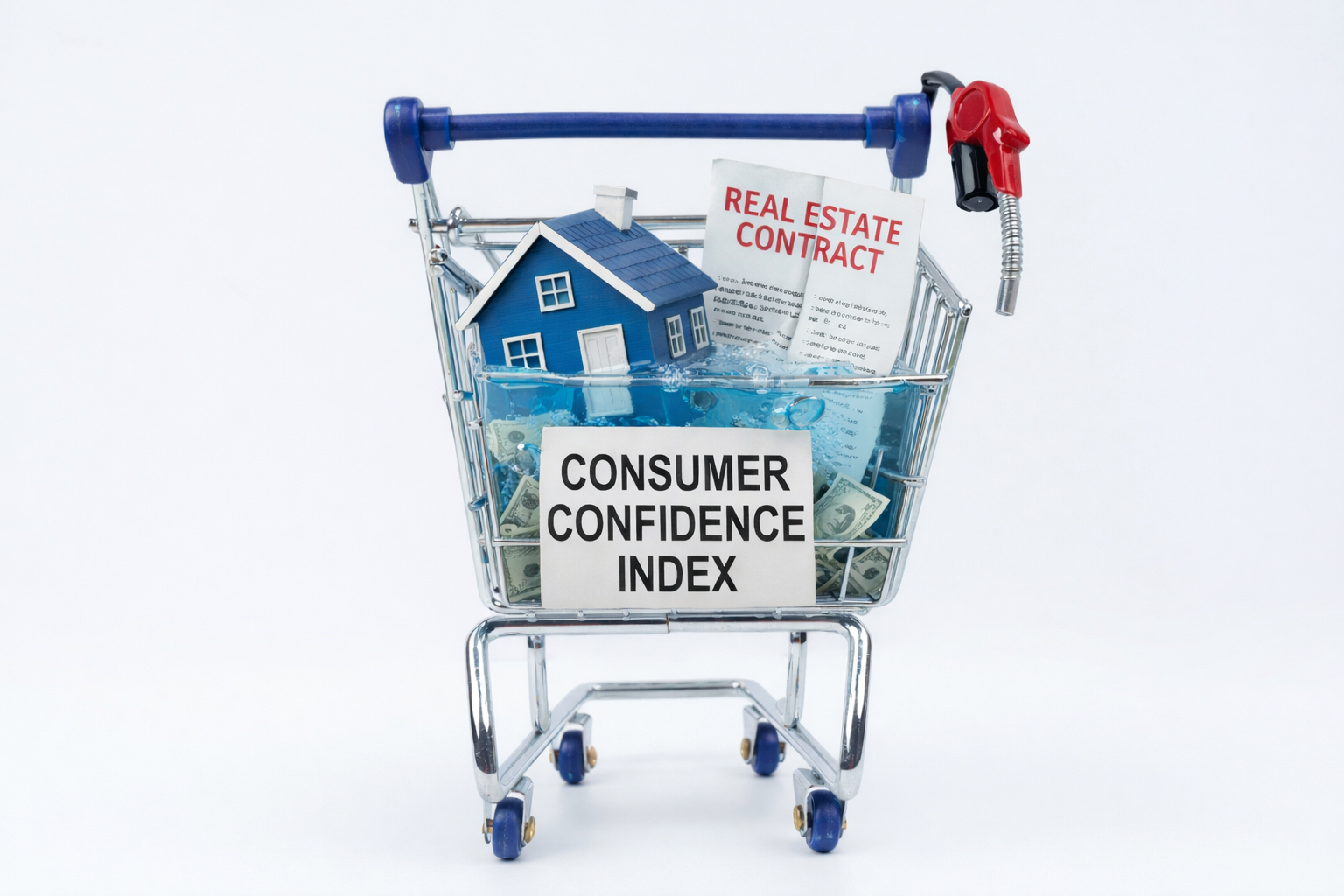
Why More Real Estate Deals Are Falling Apart Right Now — And What It Means for You
Over the past several weeks, headlines have been dominated by global tension, rising oil prices, and increased volatility in the financial markets. While these issues may seem distant from your local housing market, they are having a very real and immediate impact—and it’s showing up in a very specific way:
More real estate deals are falling apart.
The connection isn’t always obvious, but it runs through something far more powerful than any single economic metric: consumer confidence.
And when confidence drops, transactions become more fragile.
The Confidence Problem (Back Near COVID-Era Lows)
The data helps tell the story. Consumer confidence levels are currently sitting near the low 60s—historically a weak range and not far from what we saw during the uncertainty of the COVID-19 period.
This matters because confidence isn’t just a statistic—it reflects how people feel about their financial future.
And right now, that feeling is cautious, uncertain, and defensive.
What’s Driving the Drop? Follow the Money (and the Pump)
Several forces are hitting consumers at once, creating a compounded psychological effect.
Gas prices have surged again, largely due to geopolitical tensions. When consumers see higher prices at the pump daily, it sends an immediate emotional signal that costs are rising and control is slipping.
At the same time, stock market volatility is chipping away at household wealth—especially for higher-income buyers who tend to drive a large portion of housing demand. When portfolios fluctuate, even temporarily, people feel less secure and become more conservative.
Layered on top of that is the return of inflation concerns, reinforcing the idea that the cost of living may continue rising.
Put simply:
When people feel poorer… they act poorer.
And That’s Showing Up in Real Estate
This shift in sentiment is now clearly visible in the housing market.
Buyers are hesitating more before making offers, taking additional time to evaluate decisions, and negotiating more aggressively when they do engage. Many are pulling back from purchases that feel like a stretch, opting instead to wait for more clarity.
But more importantly—and this is where the shift is most noticeable—deals are becoming less stable.
- Buyers are backing out more easily during due diligence
- Financing issues are surfacing later in the process
- Small concerns that used to be worked through are now deal breakers
On the seller side, this translates into fewer showings in some cases and a more price-sensitive buyer pool overall.
Properties are still selling—but the margin for error has tightened significantly.
This Is Not a Crash — It’s a Confidence Pause
It’s important to draw a clear line here.
This is not a structural issue like the 2008 housing crisis.
There’s no widespread oversupply.
Lending standards remain intact.
The core foundation of the housing market is still strong.
What we’re seeing is a confidence-driven pause—one where uncertainty is causing hesitation, not collapse.
And confidence, unlike fundamentals, can shift quickly.
Why This Could Be Temporary (The Opportunity Angle)
Despite the current uncertainty, there are signs of resilience.
Long-term inflation expectations remain relatively stable. The labor market, while showing some softening, is not experiencing a severe downturn. The broader economy is holding up better than many would expect given the headlines.
This suggests the current slowdown may be temporary.