 See photos and updates from listings directly in your feed
 Share your favorite listings with friends and family
 Save your search and get new listings directly in your mailbox before everybody else
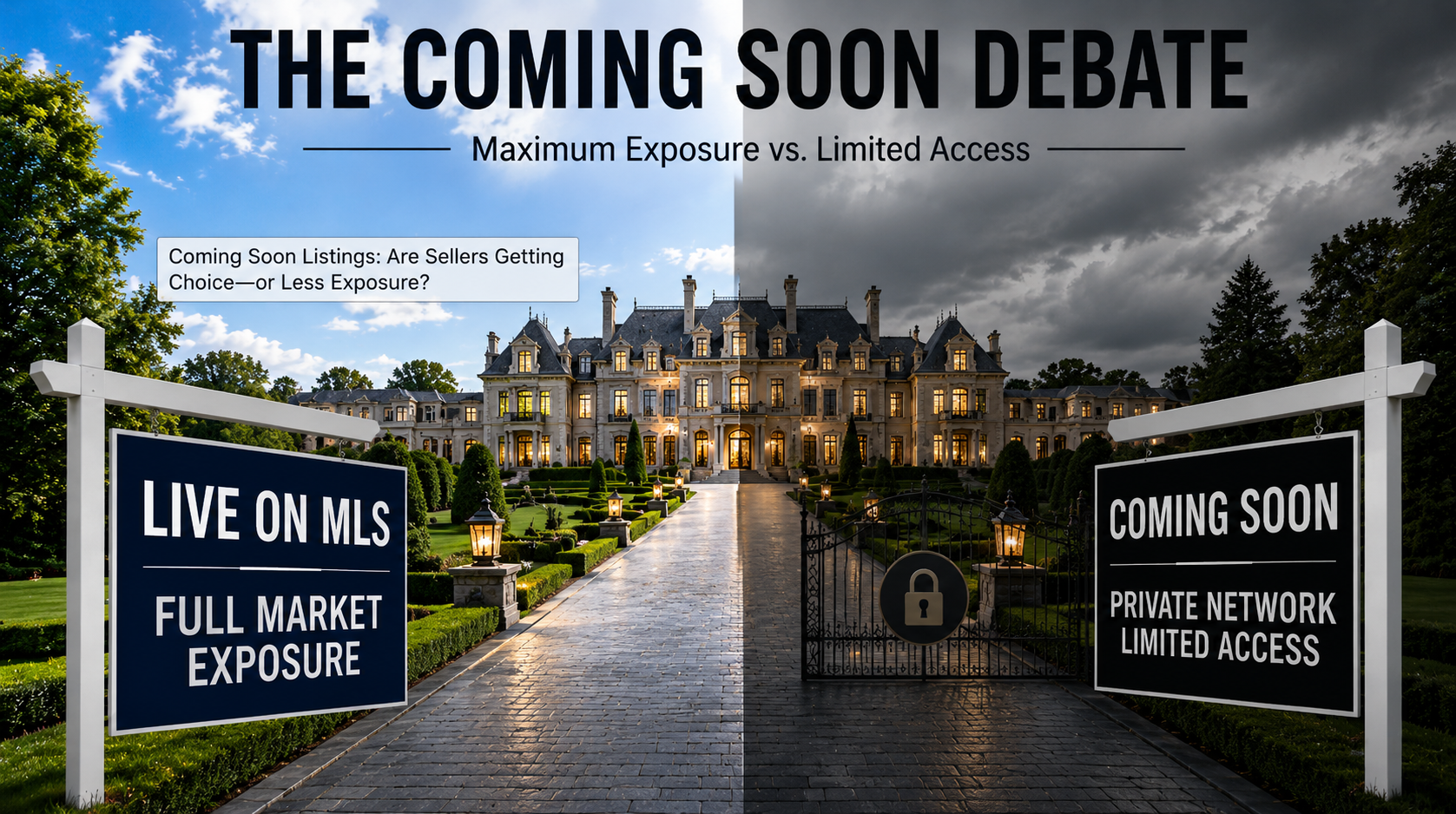
Coming Soon Listings: Are Sellers Really Getting More Control—Or Less Exposure?
A major battle is unfolding in real estate right now over Coming Soon listings, private exclusives, MLS rules, Zillow, Redfin, Compass, and who gets to control listings before they hit the open market.
On the surface, the debate sounds simple: seller choice.
Some brokerages and technology companies argue that homeowners should have more flexibility in how their property is introduced to the market. They promote private exclusives, controlled rollouts, and delayed MLS exposure as tools that give sellers more privacy and more control.
That sounds reasonable—until you ask the question that actually matters:
If the goal is to maximize price, why would a seller intentionally limit exposure?
At its core, selling a home is about creating demand. And demand only grows when more qualified buyers are aware the property exists.
The more buyers who see a home, the greater the chance of generating urgency, competition, and stronger offers. That is how higher sale prices are often achieved.
If ten buyers see a property, that creates one level of demand. If one hundred buyers see it, that creates another. But when the entire marketplace sees the home at the same time, the seller has the best opportunity to discover the strongest possible price.
That is not just marketing.
That is price discovery.
This is one of the reasons the MLS system has historically been so valuable to sellers. While no system is perfect, the MLS was designed to create broad exposure by distributing listings across brokers, agents, websites, and buyer networks simultaneously.
Broad exposure helps prevent any one company from controlling access to buyer demand.
That is where concerns surrounding Coming Soon listings and private exclusives begin to grow.
Many of these strategies are presented as seller-friendly, but in some cases they may benefit the brokerage more than the homeowner. A company may claim it is offering “more control” or “exclusive marketing,” while quietly keeping the listing inside its own ecosystem longer before exposing it to the full market.
Why does that matter?