 See photos and updates from listings directly in your feed
 Share your favorite listings with friends and family
 Save your search and get new listings directly in your mailbox before everybody else
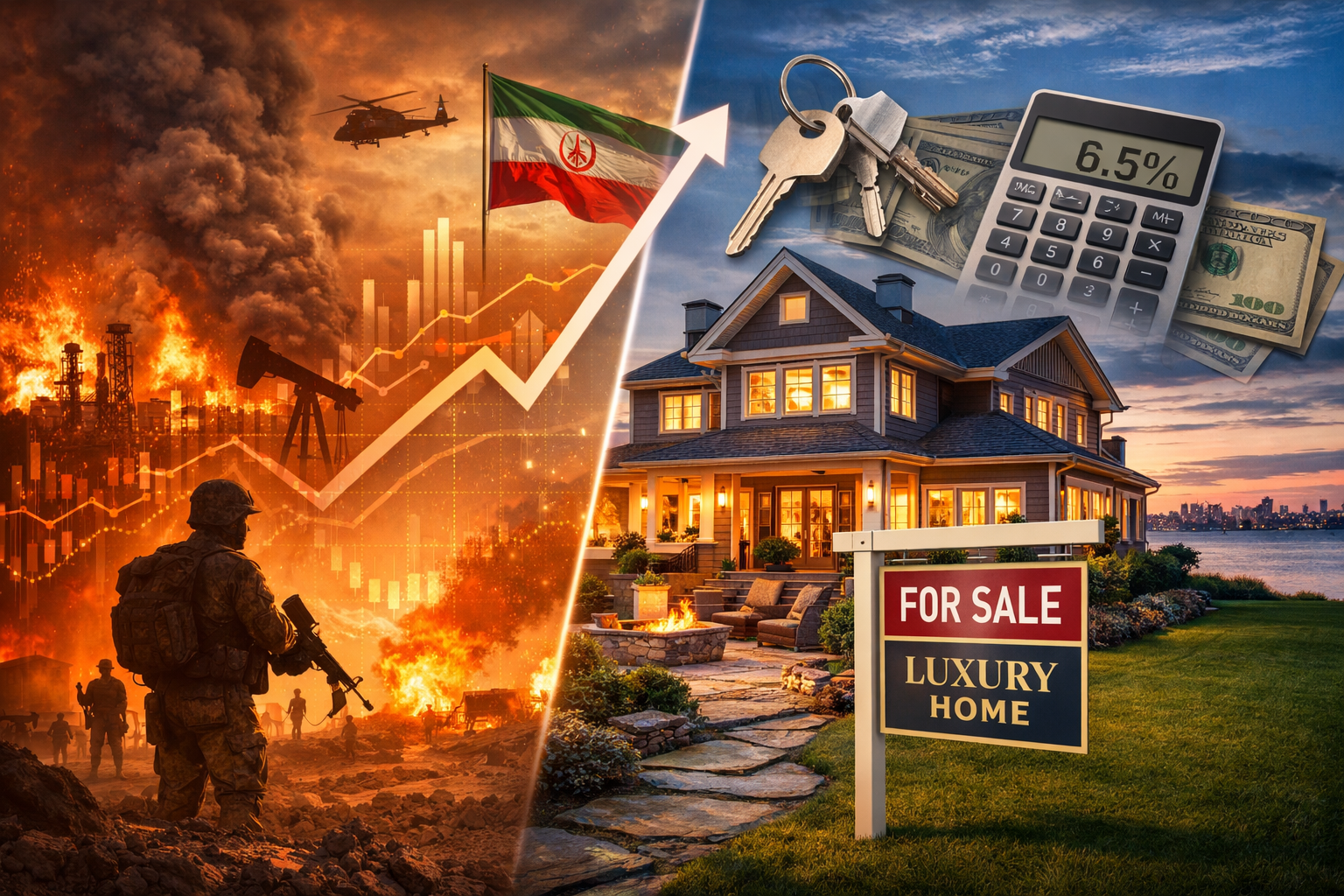
Global conflict doesn’t stay isolated—it filters into financial markets, consumer behavior, and eventually real estate. The rising tensions involving Iran are already influencing key economic drivers like oil prices, inflation expectations, and overall confidence.
And in real estate, confidence is everything.
So the real question becomes:
Does uncertainty freeze the housing market—or does it push people to reposition into safer opportunities?
The answer is both. But not equally.
Uncertainty Slows Decision-Making First
The immediate impact of any geopolitical tension is psychological.
Buying a home is a major financial move. When people feel unsure about the economy, their job stability, or the direction of the world, they hesitate.
We’re already seeing signs of that hesitation. A portion of buyers are choosing to wait—not because they can’t buy, but because they’re unsure if they should.
That pause matters.
When fewer buyers are actively competing:
- Days on market increase
- Offers become less aggressive
- Price growth starts to flatten
This doesn’t mean prices collapse—it just means the pace slows down.
Oil Prices Could Be the Real Trigger
The bigger story isn’t fear—it’s energy.
Iran sits near one of the most critical oil routes in the world. Any disruption there tends to push oil prices higher, and that creates a ripple effect:
- Higher fuel and transportation costs
- Increased inflation pressure
- Interest rates staying elevated longer
Mortgage rates have already reacted slightly upward after recent tensions.
And here’s the truth most people miss:
👉 Housing doesn’t respond to headlines—it responds to rates.
Even a small increase in mortgage rates reduces affordability. That alone can remove a percentage of buyers from the market.
Real Estate Runs on Confidence
At its core, real estate is a confidence-driven asset.
When people feel secure:
- They upgrade homes
- They relocate for opportunity
- They invest
When confidence drops:
- Moves get delayed
- First-time buyers hesitate
- Lending standards tighten
If energy prices stay elevated and economic growth slows, housing activity tends to follow.
But Money Always Moves Toward Stability
Here’s where it gets interesting.
Uncertainty doesn’t just reduce demand—it redirects it.
During periods of global tension, capital and people tend to flow toward:
- Stable economies
- Strong job markets
- Cities with long-term growth drivers
In the U.S., that often means areas with:
- Tech and innovation
- Education hubs
- Economic diversity
Instead of a full slowdown, what you often see is a shift in where demand concentrates.
What This Means at the Local Level
Not all markets react the same way.
Higher-end markets
Luxury and tech-driven areas may see some hesitation if financial markets get volatile.
Energy-influenced regions
These areas can benefit short-term from rising oil prices.
Second-home and lifestyle markets
These tend to be more sensitive—buyers here are often more discretionary.
The Reality Most People Overlook
No matter what’s happening globally, one rule continues to hold:
👉 Homes that are priced correctly still sell.
Real estate is local. Always has been.
You can have global uncertainty, but if:
- Inventory is tight
- Pricing is aligned with the market
- The property shows well
…it will move.
✅ The Bottom Line
Tensions in Iran could impact housing—but not in a simple, one-direction way.
- Higher oil prices may keep mortgage rates elevated
- Uncertainty may slow some buyer activity
- But demand could shift toward stronger, more stable markets
If you’re buying or selling, don’t get distracted by headlines.
Focus on what actually drives results:
- Interest rates
- Local inventory
- Pricing strategy
That’s where the real opportunity—and risk—exists.